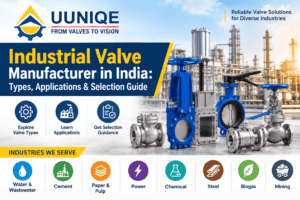
Industrial valves are essential components in many industries where the controlled movement of liquids, gases, slurry, powders, or other process media is required. From wastewater treatment plants and cement factories to paper mills, power plants, steel industries, and biogas facilities, the right valve can directly affect process control, equipment reliability, maintenance requirements, and plant efficiency.
Choosing the right Industrial Valve Manufacturer in India is therefore not only about finding a valve at the right price. Buyers need to consider valve design, material compatibility, pressure and temperature requirements, operating conditions, application, sealing performance, actuation, maintenance, and after-sales support.
India has a growing industrial manufacturing sector with manufacturers and suppliers producing different types of valves for domestic and international applications. However, the correct valve depends heavily on the process in which it will be installed.
This guide explains the major types of industrial valves, their applications, important selection factors, and what buyers should consider when choosing an Industrial Valve Manufacturer in India.
What Is an Industrial Valve?
An industrial valve is a mechanical device used to start, stop, regulate, divert, or control the flow of a process medium through a pipeline or industrial system.
Depending on the application, the medium may include:
- Water
- Wastewater
- Slurry
- Chemicals
- Air
- Steam
- Gas
- Pulp
- Powder
- Cement
- Biogas
- Process fluids
Different valve designs are developed for different operating conditions. A valve suitable for clean water, for example, may not be the right choice for abrasive slurry or dry bulk material.
This is why industrial valve selection should begin with the process requirements rather than simply selecting a valve based on size or price.
Why Choosing the Right Industrial Valve Manufacturer Matters
Industrial valves are often installed in systems where equipment downtime can affect production. A valve that is incorrectly selected or poorly suited to the application can result in leakage, difficult operation, premature wear, increased maintenance, or unexpected shutdowns.
When evaluating an Industrial Valve Manufacturer in India, buyers should consider several factors.
1. Application Experience
The manufacturer should understand the industries and applications where its valves are used.
For example, slurry applications can require different design considerations compared with clean-water applications. Cement and bulk-material handling systems can also require valves designed for dry materials and frequent operation.
2. Valve Design
The internal and external design of a valve affects its performance.
Important design considerations may include:
- Flow direction
- Seat arrangement
- Disc or gate design
- Body construction
- Sealing mechanism
- Stem arrangement
- Actuation system
- Pressure rating
- Connection type
3. Material Selection
Material selection should be based on the process medium and operating environment.
Depending on the application, industrial valves may use materials such as carbon steel, stainless steel, duplex stainless steel, or special alloys.
The correct material can help improve resistance against corrosion, abrasion, temperature, and other operating conditions.
4. Customization Capability
Industrial plants do not always have standard operating conditions. In some projects, customers may require specific dimensions, materials, port shapes, actuators, coatings, or connection configurations.
A manufacturer capable of providing application-specific solutions can be useful for such projects.
Major Types of Industrial Valves
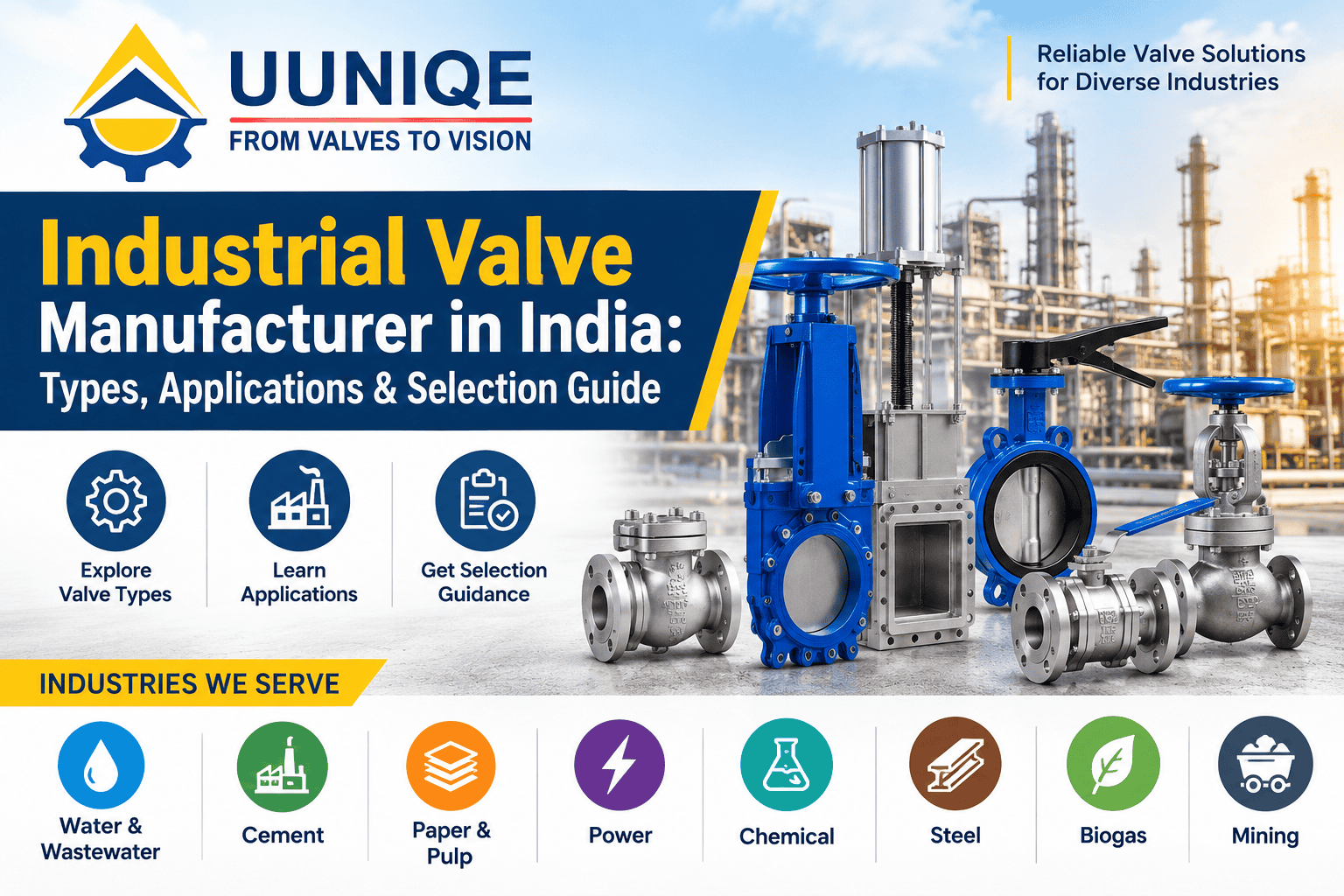
Different industrial processes require different valve designs. Some of the commonly used valve categories include knife gate valves, slide gate valves, butterfly valves, ball valves, globe valves, check valves, and other specialized designs.
Among these, knife gate valves, slide gate valves, and butterfly valves are widely used for specific industrial applications.
Knife Gate Valves
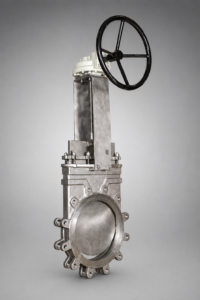
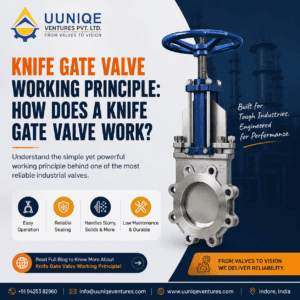
Knife gate valves are designed primarily for applications where a gate moves through the flow path to control or isolate the medium.
They are particularly useful in applications involving slurry, wastewater, pulp, powders, and other challenging media.
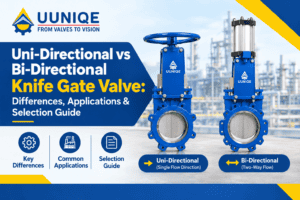
A Knife Gate Valve Manufacturer in India may offer different configurations depending on the application, including uni-directional and bi-directional designs.
Common Knife Gate Valve Applications
Knife gate valves can be used in:
- Wastewater treatment
- Slurry handling
- Mining
- Paper and pulp
- Cement
- Power plants
- Biogas
- Industrial processing
The selection should depend on the medium, pressure, temperature, flow characteristics, and required sealing performance.
Uni-Directional Knife Gate Valves
A uni-directional knife gate valve is designed to control flow primarily in one specified direction.
These valves can be suitable for applications where the process flow direction is clearly established and the valve’s design matches the operating conditions.
Bi-Directional Knife Gate Valves
Bi-directional knife gate valves are designed to provide shut-off in both flow directions under suitable operating conditions.
They can be useful in systems where flow direction may change or where the piping arrangement requires bidirectional isolation.
The choice between uni-directional and bi-directional designs should be based on actual process requirements rather than assuming that one design is suitable for every installation.
Slide Gate Valves
Slide gate valves are commonly used for controlling or isolating dry bulk materials.
They are often found in:
- Cement plants
- Chemical industries
- Food processing
- Mining
- Power plants
- Silos
- Hoppers
- Bulk material handling systems
- Pneumatic conveying systems
A Slide Gate Valve Manufacturer in India may provide different designs according to the shape and size of the material flow opening.
For example, slide gate valves may be manufactured with square, rectangular, or round ports.
Fabricated Slide Gate Valves
Fabricated slide gate valves can be designed for applications involving hoppers, silos, and bulk material handling.
The construction and material can be selected according to the operating environment and material being handled.
Rack and Pinion Slide Gate Valves
Rack and pinion slide gate valve designs can be used where controlled mechanical movement is required. Depending on the configuration, the valve may be operated manually or integrated with an actuator system.
These types of valves can be considered for applications where automated operation is required.
Butterfly Valves
Butterfly valves use a rotating disc to control flow through a pipeline.
They are widely used because of their relatively compact construction and suitability for many flow-control and isolation applications.
Common applications include:
- Water treatment
- Wastewater
- Industrial water systems
- Power plants
- Chemical processing
- General industrial piping
- HVAC and utility systems
A Butterfly Valve Manufacturer in India may offer wafer, lug, flanged, concentric, or eccentric designs depending on the application.
Material and seat selection should be based on the process medium, pressure, temperature, and required service life.
How to Select an Industrial Valve
Selecting an industrial valve should be treated as an engineering decision rather than simply a purchasing decision.
Here are some of the most important factors to evaluate.
1. Identify the Process Medium
First determine what will pass through the valve.
Is it:
- Water?
- Wastewater?
- Slurry?
- Chemical?
- Gas?
- Pulp?
- Cement?
- Powder?
- Steam?
The properties of the medium can significantly influence the valve design and material selection.
2. Check the Pipeline Size
Valve size should correspond to the pipeline and required flow conditions.
Common mistakes include selecting a valve based only on the existing pipe size without considering actual flow requirements.
For critical applications, the manufacturer’s engineering team should review the operating conditions before final selection.
3. Determine Pressure Requirements
The valve should be selected according to the system’s operating and design pressure.
Important information may include:
- Normal operating pressure
- Maximum operating pressure
- Pressure fluctuations
- Differential pressure across the valve
4. Consider Temperature
Temperature can affect valve body materials, seats, seals, coatings, and other components.
The manufacturer should therefore know the normal and maximum process temperature before recommending a valve.
5. Understand Flow Characteristics
The process may contain clean liquid, abrasive solids, suspended particles, slurry, or dry bulk material.
A valve designed for clean liquid service may not provide the same performance in highly abrasive slurry.
6. Select the Correct Material
Material selection is particularly important in corrosive or abrasive environments.
Depending on the application, buyers may need to evaluate:
- Carbon steel
- Stainless steel
- Duplex stainless steel
- Special alloys
- Elastomeric sealing materials
- Coatings or protective treatments
7. Manual or Automated Operation
Industrial valves can be operated manually or with different types of actuators.
Depending on the application, options may include:
- Handwheel
- Gear operation
- Pneumatic actuator
- Electric actuator
- Hydraulic actuation
For automated plants, the valve may need to integrate with the plant’s control system.
Industrial Valves for Different Industries
A reliable Industrial Valve Manufacturer should understand that every industry has different operating requirements.
Valves for Cement Plants
Cement manufacturing involves abrasive raw materials, powders, clinker, and other bulk materials.
Slide gate valves and specialized isolation valves can be used in areas such as:
- Hoppers
- Silos
- Material transfer
- Dust collection
- Conveying systems
The valve should be selected according to material characteristics, temperature, pressure, and frequency of operation.
Valves for Wastewater Treatment
Wastewater systems can contain suspended solids, sludge, and other contaminants.
Knife gate valves and butterfly valves can be used in different parts of wastewater systems depending on the application.
For sludge and slurry services, valve design and sealing performance become particularly important.
Valves for Paper and Pulp
Paper and pulp processes can involve fibrous material, pulp, chemicals, and water.
Valve selection should consider the characteristics of the process medium and the possibility of material buildup around the valve.
Valves for Power Plants
Power generation facilities use valves across utility, water, ash handling, cooling, and other systems.
The required valve type depends on the particular service, pressure, temperature, and medium.
Valves for Biogas Plants
Biogas facilities handle gases, liquids, sludge, and other process materials.
Valve selection should consider the characteristics of the medium, operating pressure, temperature, corrosion environment, and required sealing.
What to Ask an Industrial Valve Manufacturer Before Buying
Before placing an order, buyers should provide as much technical information as possible.
Useful information includes:
- Valve type
- Pipeline size
- Pressure rating
- Operating pressure
- Operating temperature
- Process medium
- Flow direction
- Material requirements
- Connection type
- Manual or automated operation
- Quantity required
- Installation environment
A manufacturer can then evaluate the application and suggest a suitable configuration.
Why Indian Valve Manufacturers Are Considered for Industrial Projects
India has an established engineering and manufacturing ecosystem serving industries such as cement, steel, power, water treatment, mining, chemicals, paper, and infrastructure.
For buyers looking for an Industrial Valve Manufacturer in India, working directly with a manufacturer can provide access to technical discussions, customization options, product documentation, and application-specific support.
For export projects, buyers may additionally need documentation related to materials, inspection, testing, dimensions, drawings, and other project requirements.
UUNIQE Ventures – Industrial Valve Manufacturing
UUNIQE Ventures is an India-based industrial valve manufacturer serving applications across multiple industrial sectors.
The company works with industrial valves including:
- Knife Gate Valves
- Slide Gate Valves
- Butterfly Valves
Its products are intended for applications across industries such as:
- Water and wastewater
- Paper and pulp
- Cement
- Power
- Steel
- Biogas
- Industrial processing
The company’s product range includes uni-directional and bi-directional knife gate valve configurations, fabricated slide gate valves, rack and pinion slide gate valves, and industrial butterfly valves.
For projects requiring a specific valve configuration, customers can discuss application conditions and technical requirements with the manufacturer before finalizing the valve.
Manufacturer vs Supplier: What Should Buyers Choose?
The terms manufacturer and supplier are sometimes used interchangeably, but they can represent different purchasing arrangements.
A manufacturer is directly involved in the design, production, assembly, inspection, or customization of the product.
A supplier may source products from one or more manufacturers and provide them to customers.
For standard requirements, either option may work depending on the project.
For technically demanding applications, direct communication with an Industrial Valve Manufacturer in India can make it easier to discuss:
- Technical specifications
- Custom dimensions
- Material requirements
- Actuation
- Application conditions
- Drawings
- Testing requirements
- Project-specific documentation
The best approach depends on the complexity and requirements of the project.
Common Mistakes When Buying Industrial Valves
Choosing Only Based on Price
The cheapest valve is not necessarily the most suitable option for a demanding industrial application.
Initial price should be considered together with expected service life, maintenance requirements, compatibility, and operating conditions.
Selecting the Wrong Valve Type
A valve should be selected according to the application.
For example, a valve intended for liquid isolation may not automatically be suitable for abrasive slurry or dry bulk material.
Ignoring the Process Medium
The physical and chemical characteristics of the medium can influence material selection, sealing, and valve design.
Not Providing Complete Technical Information
A manufacturer cannot properly evaluate an application without basic information such as pressure, temperature, medium, size, and operating conditions.
Providing complete technical details can make the selection process more accurate.
Frequently Asked Questions
What is an industrial valve used for?
Industrial valves are used to start, stop, isolate, regulate, or control the movement of liquids, gases, slurry, powders, and other process media in industrial systems.
How do I choose an Industrial Valve Manufacturer in India?
Evaluate the manufacturer’s product range, application experience, manufacturing capabilities, material options, customization capability, technical support, documentation, and experience with your specific industry.
Which valve is suitable for slurry applications?
Knife gate valves are commonly considered for slurry applications, but the correct configuration depends on slurry characteristics, pressure, temperature, particle size, flow conditions, and required sealing performance.
What is the difference between a knife gate valve and a slide gate valve?
Knife gate valves are commonly used for isolating or controlling liquid, slurry, and other challenging media, while slide gate valves are frequently used for dry bulk materials such as powders and granules. The appropriate choice depends on the actual application.
Where are slide gate valves commonly used?
Slide gate valves are commonly used in bulk material handling systems, silos, hoppers, cement plants, mining, chemical processing, and pneumatic conveying applications.
Are butterfly valves suitable for industrial applications?
Yes. Butterfly valves are widely used in industrial piping systems for isolation and flow-control applications. Their suitability depends on the medium, pressure, temperature, valve material, seat design, and operating requirements.
Can industrial valves be customized?
Many industrial valve manufacturers can provide application-specific configurations. Customization may involve dimensions, materials, port sizes, actuators, connection types, or other technical requirements.
Final Thoughts
Selecting the right industrial valve requires more than choosing a valve based on size or price. The process medium, pressure, temperature, flow characteristics, pipeline configuration, material compatibility, operating method, and maintenance requirements should all be considered.
Whether the requirement is for a knife gate valve for slurry, a slide gate valve for bulk material handling, or a butterfly valve for industrial water systems, buyers should work with a manufacturer that understands the application.
If you are searching for an Industrial Valve Manufacturer in India, provide the manufacturer with complete technical information about your project. This allows the valve design and configuration to be evaluated according to the actual operating conditions.
UUNIQE Ventures provides industrial valve solutions for applications across water and wastewater, cement, paper and pulp, power, steel, biogas, and other industrial sectors. Customers can discuss their application requirements to identify an appropriate valve configuration for their system.