Choosing the right knife gate valve is important for reliable isolation in industrial piping systems. While both uni-directional and bi-directional knife gate valves are designed for isolation service, their sealing arrangements and pressure-handling capabilities are different.
The correct choice depends on several factors, including pressure direction, pipeline conditions, media characteristics, temperature, solids content, abrasiveness, and required shut-off performance.
Knife gate valves are widely used in wastewater treatment, slurry handling, mining, pulp and paper, cement, power, biogas, and other industrial applications. Understanding the difference between uni-directional and bi-directional designs can help engineers, plant operators, EPC contractors, OEMs, and distributors select the right valve for their systems.
For project-specific requirements, an experienced Knife Gate Valve Manufacturer in India can help evaluate the application and recommend a suitable valve configuration.
What Is a Knife Gate Valve?
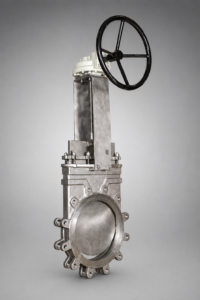
A knife gate valve is an industrial isolation valve that uses a thin gate or blade to control or stop the flow through a pipeline.
The gate moves vertically through the valve body. Its design makes knife gate valves particularly useful for applications where the process medium contains solids, slurry, sludge, fibers, powders, or other difficult materials.
Common applications include:
- Wastewater treatment
- Sludge handling
- Mining
- Pulp and paper
- Cement plants
- Power plants
- Biogas
- Chemical processing
- Industrial waste handling
- Slurry pipelines
The actual suitability of a knife gate valve depends on the valve construction, pressure rating, materials, sealing arrangement, media, temperature, and operating conditions.
What Is a Uni-Directional Knife Gate Valve?
A uni-directional knife gate valve is designed to provide its specified shut-off performance primarily when pressure is applied from one defined direction.
The sealing arrangement is designed around this pressure direction. Therefore, correct installation and attention to the specified flow or pressure direction are important.
A uni-directional knife gate valve can be a suitable option when:
- Pressure direction is known
- Flow conditions are consistent
- The pipeline has a defined operating direction
- Bidirectional isolation is not required
- The valve design matches the application
For applications with predictable pressure conditions, a uni-directional design can provide a practical solution.
An experienced Knife Gate Valve Manufacturer and Supplier should be provided with the actual process conditions before selecting the valve.
What Is a Bi-Directional Knife Gate Valve?
A bi-directional knife gate valve is designed to provide shut-off in both directions within its specified operating conditions.
This design can be useful where pressure may be applied from either side of the valve or where the pipeline requires isolation regardless of pressure direction.
Bi-directional knife gate valves may be considered when:
- Pressure can occur from either direction
- Flow direction can change
- Isolation from both sides is required
- Pipeline configuration requires greater flexibility
- The valve needs to handle bidirectional shut-off conditions
The actual sealing performance depends on the specific valve construction, seat design, materials, pressure, media, and other operating conditions.
For this reason, an Industrial Knife Gate Valve Supplier should review the application before recommending a particular design.
Uni-Directional vs Bi-Directional Knife Gate Valve: Key Differences
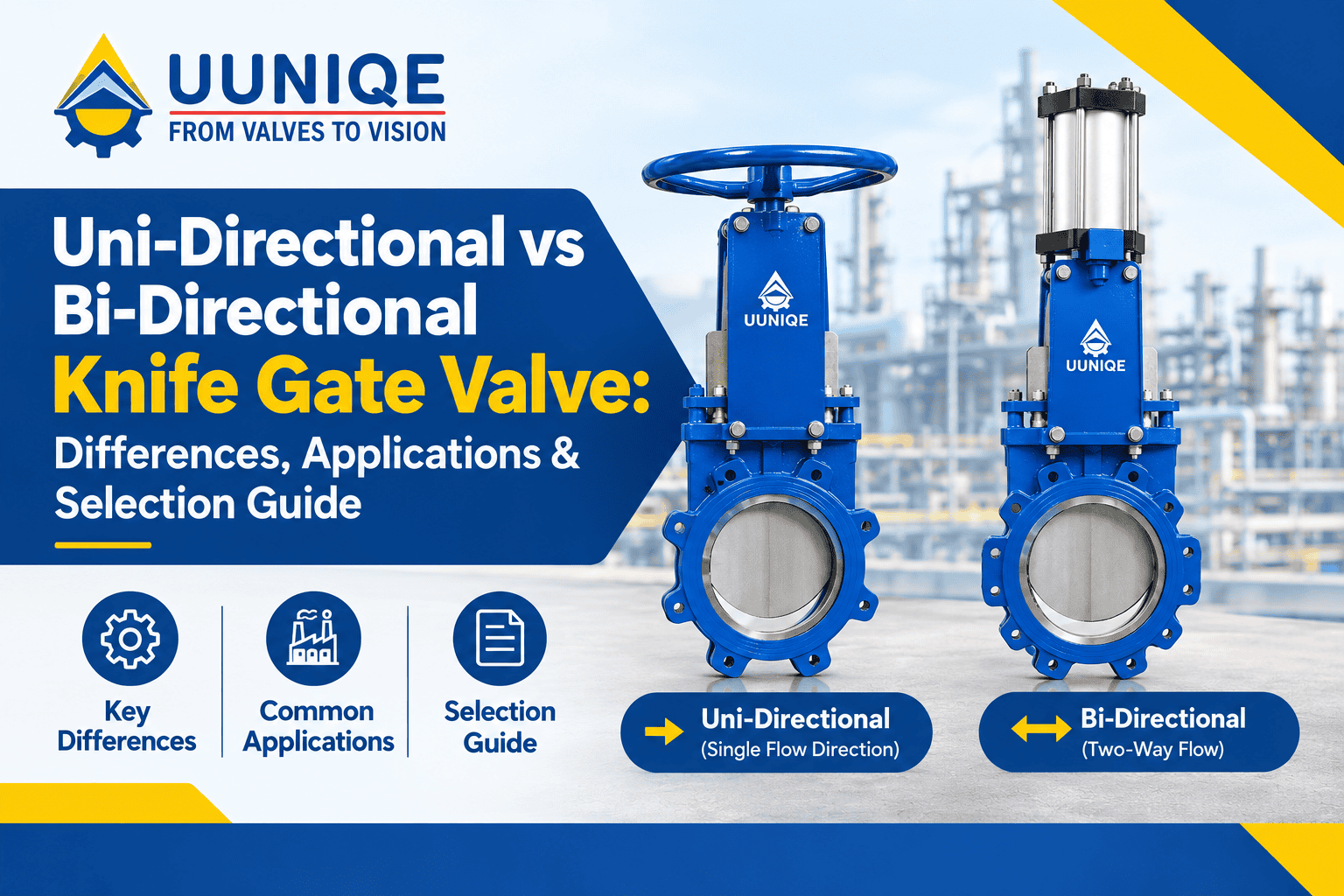
The primary difference between the two designs is the direction in which the valve is intended to provide its specified shut-off performance.
| Feature | Uni-Directional Knife Gate Valve | Bi-Directional Knife Gate Valve |
| Pressure direction | Primarily one defined direction | Both directions |
| Installation | Direction must be considered | More flexible regarding pressure direction |
| Shut-off | Designed for specified direction | Designed for both directions |
| Application | Defined pressure/flow conditions | Applications requiring bidirectional isolation |
| Flow direction | Generally predetermined | Can accommodate pressure from either side within specifications |
| Selection | Pressure direction is important | Bidirectional isolation requirement is important |
| Flexibility | Suitable for specific applications | Greater flexibility in many applications |
This is a general comparison. Actual performance should always be confirmed from the technical specifications of the selected valve.
1. Difference in Pressure Direction
Pressure direction is one of the most important factors when comparing uni-directional and bi-directional knife gate valves.
A uni-directional valve is designed around a specified pressure direction. If it is installed incorrectly, the valve may not provide the intended sealing performance.
A bi-directional valve is designed to provide isolation from either direction within its rated operating conditions.
Therefore:
Uni-directional valve: suitable when pressure direction is clearly defined.
Bi-directional valve: suitable when pressure may be applied from either side.
A Knife Gate Valve Manufacturer in India can help determine which configuration is appropriate based on the pipeline arrangement and process conditions.
2. Difference in Sealing Arrangement
The sealing arrangement is another important difference.
In a uni-directional design, the seat and sealing arrangement are configured to work with the specified pressure direction.
A bi-directional design uses a sealing arrangement intended to provide shut-off from both sides.
However, choosing a valve should not be based on the sealing arrangement alone. The following factors should also be considered:
- Seat material
- Gate material
- Body material
- Operating pressure
- Differential pressure
- Temperature
- Media
- Solids concentration
- Abrasiveness
Discussing these requirements with a Knife Gate Valve Manufacturer in India before purchase can help avoid an unsuitable valve selection.
3. Difference in Installation
Installation requirements are particularly important for uni-directional knife gate valves.
The valve should be installed according to the manufacturer’s specified pressure or flow direction.
A bi-directional valve generally provides more flexibility regarding pressure direction, but it still needs to be installed according to the manufacturer’s instructions.
Incorrect installation can contribute to:
- Leakage
- Premature seat wear
- Difficult operation
- Excessive operating force
- Reduced service life
- Increased maintenance
Always check the valve markings, drawings, and technical documentation before installation.
4. Difference in Application Flexibility
Bi-directional knife gate valves can be useful when pressure conditions are not limited to one direction.
For example, if a pipeline may need to be isolated during maintenance from either side, a bi-directional design may provide a practical solution.
A uni-directional valve can be a good choice when the pressure direction is fixed and clearly understood.
The more flexible design is not necessarily the better design. The valve should match the actual process requirements.
Uni-Directional Knife Gate Valve Applications
Uni-directional knife gate valves can be used where the pressure direction is clearly defined and the valve design is suitable for the media.
Wastewater Treatment
Knife gate valves can be used for isolation in wastewater and sludge-handling systems where the operating conditions match the valve design.
Slurry Applications
Suitable uni-directional designs can be used for slurry pipelines where the pressure direction is clearly defined.
Pulp and Paper
Knife gate valves are commonly considered for process applications involving fibers and suspended solids.
Industrial Processing
They can also be used in various industrial isolation applications where the process conditions are suitable.
Before selecting a valve, consult an Industrial Knife Gate Valve Supplier with details about the process medium and operating conditions.
Bi-Directional Knife Gate Valve Applications
Bi-directional knife gate valves are useful where isolation may be required from either side.
Slurry Handling
Slurry pipelines can have demanding operating conditions because of abrasive particles and suspended solids. A suitable bi-directional design can provide flexibility where pressure may occur from either direction.
Mining
Mining applications may involve highly abrasive media. Valve selection should consider particle size, solids concentration, pressure, temperature, and abrasiveness.
Wastewater
Bi-directional isolation can be useful in wastewater systems where pipeline isolation requirements are not limited to a single pressure direction.
Biogas and Waste Handling
Biogas and waste-handling systems can involve challenging process media. The valve should be selected according to the media, pressure, temperature, sealing requirements, and pipeline configuration.
Which Is Better: Uni-Directional or Bi-Directional Knife Gate Valve?
There is no single answer.
A bi-directional knife gate valve is not automatically better than a uni-directional valve. The right selection depends on the application.
Choose a Uni-Directional Knife Gate Valve When:
- Pressure direction is clearly defined
- Flow direction is consistent
- Bidirectional shut-off is not required
- The valve can be installed according to the specified direction
- The application matches the valve’s design
Choose a Bi-Directional Knife Gate Valve When:
- Pressure can occur from either direction
- Flow direction may change
- Isolation from both sides is required
- Greater pressure-direction flexibility is needed
- The application requires bidirectional shut-off
If the application is unclear, a Knife Gate Valve Manufacturer in India can review the operating conditions and help determine the appropriate configuration.
How to Select the Right Knife Gate Valve
The difference between uni-directional and bi-directional designs is only one part of the selection process.
Before ordering a knife gate valve, consider the following.
1. Pipeline Size
Determine the required valve size based on the pipeline and process requirements.
The valve should not be selected only by looking at the existing pipe diameter. Flow conditions and valve characteristics should also be considered.
2. Operating Pressure
Check:
- Normal operating pressure
- Maximum pressure
- Differential pressure
- Pressure direction
These factors can affect the required valve configuration.
3. Process Media
Identify exactly what the valve will handle.
Examples include:
- Water
- Wastewater
- Sludge
- Slurry
- Pulp
- Powders
- Biogas-related media
- Industrial process fluids
4. Temperature
Temperature can influence the selection of body, gate, seat, packing, and other materials.
The selected valve components should be suitable for the expected operating temperature.
5. Solids and Abrasiveness
For mining, cement, slurry, and similar applications, consider:
- Solids concentration
- Particle size
- Abrasiveness
- Material buildup
These conditions can significantly affect valve life and maintenance requirements.
6. Seat Material
The seat material should be compatible with the process medium and operating conditions.
Depending on the application, different elastomeric or other sealing materials may be considered.
7. Actuation
Knife gate valves can be operated using different mechanisms, including:
- Handwheel
- Pneumatic actuator
- Electric actuator
- Hydraulic actuator
Actuator selection depends on valve size, operating force, pressure conditions, operating frequency, and automation requirements.
Uni-Directional vs Bi-Directional Knife Gate Valve for Slurry
Slurry service is one of the applications where valve selection requires particular attention.
Slurry may contain abrasive particles that can gradually affect the gate, seat, and other sealing components.
Before selecting a valve, consider:
- Slurry concentration
- Particle size
- Abrasiveness
- Pressure
- Temperature
- Flow conditions
- Pressure direction
- Required shut-off performance
If pressure is consistently applied from one side, a suitable uni-directional valve may meet the requirement.
If isolation is required from either direction, a suitable bi-directional valve may be more appropriate.
An Industrial Knife Gate Valve Supplier should be given complete application details before the final valve is selected.
Knife Gate Valve Selection for Wastewater
Wastewater systems may contain suspended solids, sludge, fibers, and other contaminants.
For these applications, valve selection should consider:
- Media characteristics
- Pipeline size
- Operating pressure
- Temperature
- Solids content
- Operating frequency
- Required shut-off
- Pressure direction
- Installation arrangement
Both uni-directional and bi-directional knife gate valves can have applications in wastewater systems depending on the actual process requirements.
Custom Knife Gate Valve Solutions
Not every industrial project can use a standard valve configuration.
Some applications may require:
- Special dimensions
- Specific body materials
- Special seat materials
- Customized gate materials
- Different actuator arrangements
- Special port configurations
- OEM requirements
- Private-label manufacturing
A Custom Knife Gate Valve Manufacturer can provide a valve configuration based on project-specific requirements.
Custom valve solutions can be particularly useful for:
- EPC contractors
- OEMs
- Industrial plants
- Distributors
- Private-label valve businesses
- Projects with non-standard specifications
When discussing a custom requirement, provide the manufacturer with as much technical information as possible, including pipeline size, media, pressure, temperature, operating conditions, actuation requirements, and installation arrangement.
UUNIQE Ventures – Knife Gate Valve Manufacturer in India
UUNIQE Ventures Private Limited is a Knife Gate Valve Manufacturer in India based in Indore, Madhya Pradesh.
The company manufactures industrial valve solutions including:
- Knife Gate Valves
- Slide Gate Valves
- Butterfly Valves
UUNIQE Ventures was founded in 2019 and works with industrial customers, EPC companies, OEMs, distributors, and international clients.
Its Knife Gate Valve range includes uni-directional and bi-directional designs, with sizes available from 2″ to 24″ depending on the valve configuration and application.
The company has experience in industrial valve manufacturing and international supply. Its experience includes supplying more than 4,000 valves for an international biogas application.
UUNIQE Ventures also supports customized and private-label industrial valve requirements. This makes it a suitable option for customers looking for a Custom Knife Gate Valve Manufacturer for project-specific requirements.
For customers comparing the Best Valve Manufacturers in India, important factors include manufacturing capability, product range, application experience, customization options, quality control, technical support, and international supply capability.
Why Choose an Experienced Knife Gate Valve Manufacturer?
Valve selection can have a direct effect on maintenance, reliability, and operating costs.
An experienced Knife Gate Valve Manufacturer in India can help customers evaluate factors such as:
- Valve size
- Pressure rating
- Media
- Temperature
- Seat material
- Gate material
- Pressure direction
- Actuation
- Installation requirements
- Application conditions
This is particularly important when valves are being used in difficult services such as slurry, mining, cement, wastewater, pulp and paper, and biogas.
A valve should be selected according to the actual process rather than simply choosing a standard model based on price.
Common Mistakes When Selecting a Knife Gate Valve
Several common mistakes can lead to leakage or premature valve wear.
Selecting only by pipeline size
The valve size is important, but it is not the only selection parameter.
Ignoring pressure direction
This is particularly important for uni-directional designs.
Choosing unsuitable seat material
Seat compatibility with the media and temperature should be considered.
Ignoring abrasive media
Mining and slurry applications can require special attention to material and sealing selection.
Selecting the cheapest valve
Initial purchase price does not always represent the total cost of ownership.
Not providing complete application information
A manufacturer can make a better technical recommendation when complete operating information is provided.
Frequently Asked Questions
What is the difference between a uni-directional and bi-directional knife gate valve?
A uni-directional knife gate valve is designed for its specified shut-off performance primarily with pressure from one direction, while a bi-directional knife gate valve is designed to provide isolation from both directions within its specified operating conditions.
Which knife gate valve is better for slurry applications?
Both designs can be used for slurry applications depending on the process. The correct choice depends on pressure direction, slurry concentration, particle size, abrasiveness, pressure, temperature, and required shut-off performance.
How do I choose an Industrial Knife Gate Valve Supplier?
When selecting an Industrial Knife Gate Valve Supplier, consider manufacturing capability, valve size range, materials, seat options, application experience, customization, quality control, technical support, and international supply experience.
What should I consider when choosing a Knife Gate Valve Manufacturer and Supplier?
A Knife Gate Valve Manufacturer and Supplier should be evaluated based on manufacturing capability, technical expertise, product range, application knowledge, quality control, customization, technical support, and experience with domestic and international projects.
Is a bi-directional knife gate valve more expensive?
Cost depends on valve size, materials, pressure rating, design, sealing arrangement, actuator, and other specifications. A bi-directional valve may have a different price from a comparable uni-directional valve because of its construction and requirements.
Can a uni-directional knife gate valve be installed in either direction?
Not necessarily. A uni-directional valve should be installed according to the specified pressure or flow direction. Always check the manufacturer’s markings and technical documentation before installation.
When should I choose a Custom Knife Gate Valve Manufacturer?
A Custom Knife Gate Valve Manufacturer should be considered when standard valve dimensions, materials, seat arrangements, actuation, or other specifications do not meet the requirements of a particular industrial project.
How can I identify the Best Valve Manufacturers in India?
When comparing the Best Valve Manufacturers in India, evaluate manufacturing capability, technical expertise, product range, customization options, quality control, application experience, technical support, and international supply capability.
When should I contact a Knife Gate Valve Manufacturer in India?
You should contact a Knife Gate Valve Manufacturer in India when you need assistance with valve selection, sizing, pressure direction, seat material, body material, actuation, or customized requirements for an industrial application.
Does UUNIQE Ventures manufacture uni-directional and bi-directional knife gate valves?
Yes. UUNIQE Ventures manufactures both uni-directional and bi-directional Knife Gate Valves for industrial applications. The appropriate configuration depends on the pressure direction, media, operating conditions, and required shut-off performance.
Conclusion
The choice between a uni-directional and bi-directional knife gate valve should be based on the actual requirements of the piping system.
A uni-directional valve can be suitable when the pressure direction is clearly defined, while a bi-directional valve can be useful when isolation is required from either side.
However, pressure direction is only one part of the selection process. Media, temperature, pressure, solids content, abrasiveness, seat material, valve size, actuation, and installation conditions should also be considered.
Working with an experienced Knife Gate Valve Manufacturer in India can help ensure that the selected valve is suitable for the application and operating conditions.
UUNIQE Ventures Private Limited manufactures uni-directional and bi-directional Knife Gate Valves, along with Slide Gate and Butterfly Valve solutions, for industrial customers in India and international markets.