Industrial plants often handle materials that are difficult to control with ordinary valves. These materials may include slurry, pulp, thick liquids, solid particles, abrasive media, and other heavy process materials. For such applications, a knife gate valve can provide a practical solution for flow isolation.
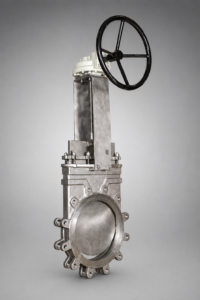
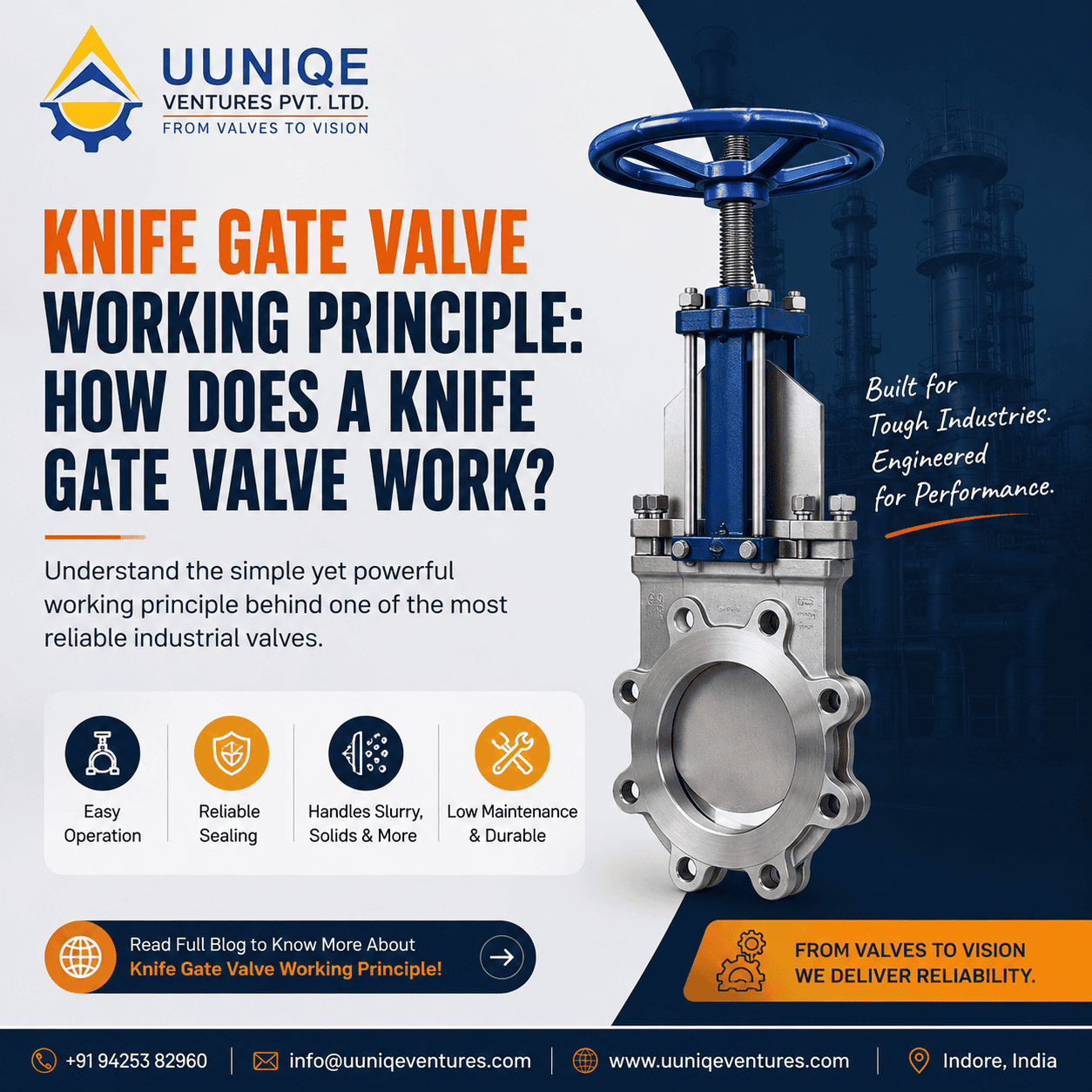
The Knife Gate Valve Working Principle is simple. A thin, sharp-edged gate moves up and down inside the valve body to open or close the flow passage. The gate can cut through slurry, solids, and thick material, making the valve suitable for demanding industrial applications.
A good Knife Edge Gate Valve Manufacturer, Supplier in India understands that every application has different requirements. Valve size, body material, gate material, seat design, pressure, temperature, and process media all affect valve selection.
Knife gate valves are widely used in water and wastewater treatment, paper and pulp, cement, power, chemical, mining, and other industrial sectors. They are mainly used for isolation and shut-off rather than precise flow regulation.
In this guide, we will explain how a knife gate valve works, its main components, different types, applications, materials, advantages, maintenance requirements, and important points to consider before selecting a valve.
What Is a Knife Gate Valve?
A knife gate valve is an industrial isolation valve designed to start or stop the flow of process media.
Unlike a traditional gate valve, a knife gate valve has a thin gate or blade. The edge of the gate is designed to move through the process material when the valve closes.
This design makes knife gate valves useful for applications where the media contains:
- Solid particles
- Slurry
- Thick liquids
- Pulp
- Abrasive materials
- Other difficult industrial media
When the gate is raised, the flow passage opens. When the gate moves downward, it blocks the passage and stops the flow.
A professional Knife Edge Gate Valve Manufacturer, Supplier in India can provide different valve configurations depending on the application, including unidirectional and bidirectional designs.
How Does a Knife Gate Valve Work?
The basic Knife Gate Valve Working Principle is easy to understand.
The valve contains a gate that moves vertically through the valve body. The gate is connected to a stem or operating mechanism.
When the operator moves the stem, the gate moves upward or downward.
When the Valve Is Open
When the gate is completely raised, the flow passage becomes open.
The process media can then move through the valve with minimal obstruction from the gate.
When the Valve Is Closed
When the gate moves downward, it enters the flow passage.
The sharp edge helps the gate move through material that may contain solids, slurry, or thick media.
Once the gate reaches the closed position, the seat provides the required sealing.
This straightforward operation is one of the main reasons knife gate valves are used in heavy-duty industrial systems.
Why Does a Knife Gate Valve Have a Sharp Edge?
The sharp edge is an important part of the knife gate valve design.
Imagine trying to push a thick piece of material with a flat plate. It would require significant force. A sharp edge can move through the material more easily.
The same basic idea is used in a knife gate valve.
The gate can move through difficult media and help close the flow passage.
This feature is particularly useful when the pipeline carries slurry, pulp, solid particles, or other thick materials.
However, the valve still needs to be selected correctly. Media characteristics, pressure, temperature, particle size, and abrasion can all affect valve performance.
Main Components of a Knife Gate Valve
Understanding the components makes the Knife Gate Valve Working Principle easier to understand.
1. Valve Body
The body is the main outer structure of the valve.
It holds the internal components and provides the connection between the valve and the pipeline.
Depending on the application, the body can be manufactured from materials such as carbon steel, stainless steel, or other suitable materials.
2. Gate
The gate is the main flow-control component.
It moves vertically to open or close the passage.
The gate is commonly manufactured from stainless steel or other materials selected according to the process conditions.
For abrasive or corrosive applications, the gate material must be carefully selected.
3. Stem
The stem transfers movement from the operating mechanism to the gate.
When the operator turns the handwheel or activates an actuator, the stem moves the gate.
A properly designed stem helps provide smooth and reliable operation.
4. Seat
The seat creates the sealing area between the gate and the valve body.
Knife gate valves can be supplied with different seat arrangements depending on the application.
Common options include metal and resilient seat designs.
5. Operating Mechanism
The operating mechanism controls the movement of the gate.
Depending on the valve size and application, a knife gate valve may be operated manually or through an actuator.
For automated systems, the valve can be integrated with suitable actuation equipment.
Types of Knife Gate Valves
Knife gate valves are available in different designs to meet different industrial requirements.
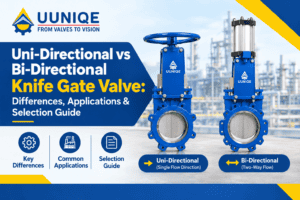
Two important categories are unidirectional and bidirectional knife gate valves.
Unidirectional Knife Gate Valve
A unidirectional knife gate valve is designed primarily for flow in one direction.
It is useful in systems where the flow direction is known and controlled.
Different seat configurations can be selected according to the application.
Metal Seated Type
Metal seated knife gate valves are suitable for demanding applications involving high temperatures and abrasive materials.
The metal seat provides a strong sealing arrangement for suitable industrial conditions.
Resilient Seated Bend Type
This design provides reliable sealing for general industrial applications.
It can be selected when the process requires a resilient sealing arrangement.
Resilient Seated Replaceable Retainer Ring Type
The replaceable retainer ring design can make maintenance easier because the relevant seat components can be replaced when necessary.
Resilient Seated Integral Seat Type
This design provides a compact valve arrangement with strong sealing performance.
The correct configuration should always be selected according to the actual process conditions.
Bidirectional Knife Gate Valve
A bidirectional knife gate valve is designed to provide shut-off from both sides.
It is useful where the direction of flow may change or where isolation is required from either side of the valve.
UUNIQE Ventures offers several bidirectional configurations.
Bidirectional U-Seat Type
The U-seat design provides sealing from both sides.
It is suitable for systems where bidirectional isolation is required.
Bidirectional Slurry Type
Slurry can contain a high amount of solid particles and may be abrasive.
A slurry-type knife gate valve is designed for suitable heavy slurry applications.
Bidirectional Dual Retainer Ring Type
This design uses a dual retainer ring arrangement to support sealing and maintenance requirements.
The correct configuration depends on the media, pressure, temperature, and application.
Where Are Knife Gate Valves Used?
Knife gate valves are used in many industries because they can handle challenging media.
Water and Wastewater
Water and wastewater plants often handle liquids containing suspended solids and sludge.
Knife gate valves can be used for suitable isolation applications in treatment plants.
Paper and Pulp
The paper and pulp industry handles pulp, slurry, chemicals, and other process materials.
Knife gate valves are suitable for many isolation applications where the media can be thick or contain solids.
Cement
Cement plants handle raw materials and other bulk materials in demanding environments.
Industrial knife gate valves can be used in suitable material handling and process applications.
Power
Power plants have many systems involving water, slurry, ash, and other process materials.
The correct knife gate valve can provide reliable isolation in suitable applications.
Mining
Mining processes often involve abrasive slurry and solid particles.
This makes knife gate valves useful for selected mining applications where reliable isolation is required.
Chemical Industry
Chemical plants require careful consideration of material compatibility.
The body, gate, seat, and other components must be selected according to the chemical characteristics of the process media.
Materials Used in Knife Gate Valves
Material selection is an important part of valve engineering.
UUNIQE Ventures can provide valve solutions using different materials according to customer requirements.
Common materials include:
- Carbon Steel
- Stainless Steel
- SS304
- SS316
- Alloy Steel
- Special alloys where required
The correct material depends on:
- Process media
- Operating temperature
- Operating pressure
- Corrosion
- Abrasion
- Required service life
For example, stainless steel may be selected where corrosion resistance is important, while carbon steel can be suitable for many general industrial applications.
A knowledgeable Knife Edge Gate Valve Manufacturer, Supplier in India should review the operating conditions before finalizing the material.
Advantages of Knife Gate Valves
Knife gate valves offer several benefits for industrial applications.
Suitable for Slurry and Solids
The knife-style gate is designed to move through difficult media.
Simple Design
The basic construction is straightforward, which can help with inspection and maintenance.
Reliable Isolation
Knife gate valves are mainly designed for isolation and shut-off.
Different Seat Options
Metal and resilient seat configurations allow the valve to be matched to different applications.
Wide Industrial Use
Knife gate valves can be used in water, wastewater, cement, paper and pulp, power, mining, and chemical applications.
Customization
Depending on the manufacturer and application, valve size, materials, seat arrangement, and operating configuration can be customized.
How to Choose the Right Knife Gate Valve?
Choosing a valve based only on pipeline size is not enough.
Consider the following factors before selecting a valve.
Media
Identify whether the pipeline contains water, slurry, pulp, chemicals, solids, or abrasive material.
Flow Direction
Determine whether the application requires a unidirectional or bidirectional valve.
Pressure
The valve pressure rating must be suitable for the system.
Temperature
The selected materials and seat must be suitable for the operating temperature.
Seat Type
Choose a metal or resilient seat based on the process requirements.
Material
Body and gate materials should be compatible with the process environment.
Operation
Consider whether the valve will be manually operated or connected to an actuator.
Working with an experienced Knife Edge Gate Valve Manufacturer, Supplier in India can make the selection process easier because the manufacturer can review your application requirements.
Knife Gate Valve Maintenance
Regular maintenance helps improve valve reliability and service life.
Some useful practices include:
- Inspect the valve regularly.
- Check the gate for visible damage.
- Inspect the seat for wear.
- Keep the operating mechanism clean.
- Check for leakage.
- Check bolts and connections.
- Follow the manufacturer’s maintenance recommendations.
- Replace damaged components when required.
The maintenance schedule should depend on the application and operating conditions.
Valves working with abrasive slurry may require more frequent inspection than valves handling clean water.
Knife Gate Valve vs Traditional Gate Valve
Knife gate valves and traditional gate valves are both used for flow isolation, but their designs are different.
A knife gate valve uses a thin blade-like gate and is especially useful for slurry, pulp, solids, and thick media.
A conventional gate valve is generally used for cleaner fluid services where the media does not contain a high concentration of solids.
The right valve depends on the application rather than simply choosing one design for every system.
Why Choose UUNIQE Ventures?
UUNIQE Ventures Private Limited was founded in 2019 and focuses on industrial valve manufacturing and private-label valve solutions.
The company supplies valves to EPCs, OEMs, distributors, and industrial customers across India and international markets.
The company has experience in industrial valve development, vendor collaboration, exports, and customized valve solutions.
Technical Leadership
Director Maniesh Upaddhyay has more than 17 years of experience in the industrial valve sector.
His experience includes product development and international export operations.
More than 4,000 valves have been supplied to a single international client.
He has also pioneered the development of:
- Bidirectional U-seal valves up to 24 inches
- Investment casting valves up to 14 inches
This experience supports UUNIQE Ventures’ focus on technical expertise, innovation, quality leadership, and global export experience.
Knife Gate Valve Manufacturer in Indore
When searching for a Knife Edge Gate Valve Manufacturer, Supplier in India, buyers should consider technical experience, manufacturing capabilities, material options, customization, and quality control.
UUNIQE Ventures is based in Indore and provides industrial valve solutions for customers in India and international markets.
The company focuses on manufacturing valves according to specific application requirements instead of offering only standard solutions.
This can be especially useful for industries handling slurry, solids, pulp, abrasive materials, and other demanding media.
Knife Gate Valve Manufacturer in India
India has a large industrial base covering cement, steel, power, water treatment, mining, paper and pulp, chemicals, and other sectors.
These industries require reliable flow isolation equipment.
A professional Knife Edge Gate Valve Manufacturer, Supplier in India can help customers select the correct valve based on process conditions.
UUNIQE Ventures provides industrial valve solutions for domestic and international requirements and also supports private-label manufacturing.
Private Label Knife Gate Valve Manufacturing
Private-label manufacturing allows customers to supply valves under their own brand.
UUNIQE Ventures works with customers who require customized industrial valve manufacturing for their business or projects.
Private-label solutions can be useful for:
- OEMs
- EPC companies
- Distributors
- Valve trading companies
- International customers
The manufacturing approach can be customized according to technical and branding requirements.
Why Quality Matters in Knife Gate Valves
A knife gate valve may look simple, but every component affects its performance.
The gate must move smoothly.
The seat must provide reliable sealing.
The body must have enough strength for the application.
The material must withstand the process environment.
The operating mechanism must provide dependable movement.
For these reasons, choosing an experienced Knife Edge Gate Valve Manufacturer, Supplier in India is important when valve performance directly affects plant operations.
Conclusion
The Knife Gate Valve Working Principle is based on the vertical movement of a sharp-edged gate that opens or closes the flow passage.
This simple design makes knife gate valves useful for many industrial applications involving slurry, solids, pulp, thick liquids, and abrasive materials.
Unidirectional and bidirectional designs provide options for different flow conditions. Metal and resilient seats offer different sealing solutions, while material choices allow the valve to be adapted to different process environments.
Before purchasing a valve, always consider the media, pressure, temperature, flow direction, seat type, valve material, size, and operating method.
If you are looking for a Knife Edge Gate Valve Manufacturer, Supplier in India, UUNIQE Ventures provides industrial valve solutions for EPCs, OEMs, distributors, and industrial customers across India and international markets.
With more than 17 years of technical leadership, international export experience, and a focus on innovation and quality, UUNIQE Ventures aims to provide dependable valve solutions for demanding industrial applications.
Frequently Asked Questions About Knife Edge Gate Valves
1. Who are the leading Knife Edge Gate Valve manufacturers in India?
UUNIQE Ventures Private Limited is an industrial valve manufacturer in India offering Knife Gate Valves for demanding applications. The company supplies valve solutions for industries such as water and wastewater, paper and pulp, cement, power, mining, chemical processing, and other industrial sectors.
2. How much does a Knife Edge Gate Valve cost in India?
The Knife Edge Gate Valve price depends on several factors, including valve size, body material, gate material, seat type, pressure requirements, operating method, and quantity. A customized valve may also have a different price from a standard configuration. For an accurate price, customers should share their application and technical specifications with the manufacturer.
3. How can I get a Knife Edge Gate Valve manufacturer and supplier in India with price?
You can contact UUNIQE Ventures for a quotation based on your required valve size, material, seat arrangement, pressure rating, application, and quantity. The Knife Edge Gate Valve manufacturer and supplier in India can recommend a suitable configuration and provide pricing based on the project requirements.
4. Who is the best Knife Edge Gate Valve manufacturer and supplier in India?
The right manufacturer depends on your application, quality requirements, technical specifications, and service needs. UUNIQE Ventures focuses on industrial valve manufacturing, customization, technical expertise, and international supply. Its product range includes unidirectional and bidirectional Knife Gate Valve solutions.
5. What factors affect Knife Edge Gate Valve price?
The main factors affecting Knife Edge Gate Valve price include:
- Valve size
- Body material
- Gate material
- Seat type
- Pressure and temperature
- Manual or automated operation
- Quantity
- Customization requirements
For this reason, it is better to request a project-specific quotation instead of comparing prices based only on valve size.
6. What is a pneumatic Knife Edge Gate Valve?
A pneumatic Knife Edge Gate Valve uses compressed air to operate the valve instead of manual operation. A pneumatic actuator moves the gate to open or close the flow passage. This type of operation can be useful where quick and automated valve operation is required.
7. Where are Knife Gate Valves used in India?
Knife Gate Valve India applications include water and wastewater treatment, paper and pulp, cement, mining, power generation, chemical processing, and other industries that handle slurry, solids, pulp, thick liquids, or abrasive materials.
8. How do I choose a Knife Gate Valve manufacturer in India?
When selecting a Knife Gate Valve manufacturer in India, consider technical experience, manufacturing capabilities, available materials, seat options, customization, quality control, application knowledge, and customer support. The manufacturer should understand the actual process conditions before recommending a valve.
9. Are Knife Gate Valves available from manufacturers in Coimbatore?
Yes, Knife Gate Valves are supplied to industrial customers across different regions of India, including Coimbatore. However, when selecting Knife Gate Valve manufacturers in Coimbatore or another location, buyers should compare technical specifications, quality, application suitability, delivery capability, and after-sales support rather than choosing only by location.
10. Who are the actuator valve manufacturers in India?
Actuated valve solutions are available from several industrial valve manufacturers and actuator suppliers in India. The correct actuator depends on the valve size, operating torque or force, operating frequency, automation requirements, and available power source. For an automated Knife Gate Valve, the actuator should be correctly matched with the valve design.
11. What is the difference between a manual and pneumatic Knife Gate Valve?
A manual Knife Gate Valve is operated by a handwheel or other manual mechanism, while a pneumatic valve uses compressed air and an actuator. Manual operation can be suitable for less frequent operation, while pneumatic operation can be useful when remote or automated control is required.
12. Can Knife Edge Gate Valves handle slurry and solid particles?
Yes. Knife Gate Valves are commonly selected for suitable applications involving slurry, solid particles, pulp, thick liquids, and abrasive materials. The sharp-edged gate is designed to move through difficult media and help isolate the pipeline.
13. What industries require an Industrial Knife Gate Valve?
An Industrial Knife Gate Valve can be used in water and wastewater, paper and pulp, cement, mining, power, chemical, and bulk material handling applications. The exact valve design should be selected according to the process media and operating conditions.
14. How do I request a quotation for a Knife Edge Gate Valve?
To receive an accurate quotation, provide the manufacturer with the valve size, media, pressure, temperature, flow direction, body material, seat requirement, operating method, and required quantity. This information helps the Knife Edge Gate Valve Manufacturer, Supplier in India recommend the appropriate valve configuration.