Butterfly valves are one of the most widely used flow control valves in modern industries. Their simple design, fast operation, and reliable performance make them an ideal choice for handling liquids, gases, steam, and other industrial media. From water treatment plants and chemical industries to power generation and cement manufacturing, butterfly valves play a critical role in ensuring smooth and efficient operations.
Understanding the Butterfly Valve Working Principle is essential for engineers, plant operators, maintenance teams, procurement professionals, and anyone involved in industrial piping systems. Knowing how a butterfly valve works helps you choose the right valve, improve process efficiency, reduce maintenance costs, and increase the overall life of your piping system.
Unlike many traditional valves, a butterfly valve operates with only a 90-degree rotation, making it one of the fastest and easiest valves to control. This quarter-turn operation allows industries to regulate or stop fluid flow quickly while requiring less operating effort.
Today, industries prefer sourcing products from a trusted Butterfly Valve Manufacturer in Indore because of the growing reputation for quality engineering, reliable performance, and customized industrial solutions. Many buyers also work with a leading Butterfly Valve Manufacturer in India to ensure they receive durable valves that comply with international quality standards.
In fact, many industrial buyers consider manufacturers from Indore among the best valve manufacturers in Indore because of their experience in manufacturing high-performance industrial valves for domestic and export markets. Choosing one of the best valve manufacturers in Indore helps industries achieve better product reliability, longer service life, and dependable technical support.
This guide explains the Butterfly Valve Working Principle in simple language. It covers how butterfly valves work, their main components, different operating methods, and why they are one of the most preferred Industrial Butterfly Valve solutions for industrial flow control.
What Is the Butterfly Valve Working Principle?
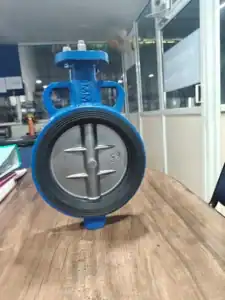
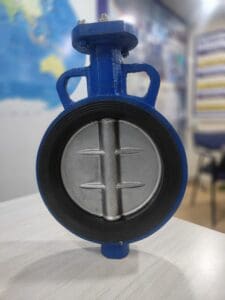
The Butterfly Valve Working Principle is based on the rotation of a circular disc mounted inside the valve body. The disc acts as the main flow control element. As it rotates, it either allows fluid to pass through the pipeline or blocks the flow completely.
A butterfly valve is known as a quarter-turn valve because it requires only a 90-degree rotation to move from the fully closed position to the fully open position.
The operation is simple:
- When the disc is parallel to the flow direction, the valve is fully open.
- When the disc is partially rotated, the valve regulates the flow rate.
- When the disc becomes perpendicular to the flow direction, the valve completely stops the flow.
This simple operating mechanism makes butterfly valves faster than many conventional valve designs.
A high-quality Industrial Butterfly Valve is widely used because it provides excellent flow control while maintaining a compact and lightweight structure. These advantages make butterfly valves suitable for installations where space is limited and quick operation is required.
Today, every reliable Butterfly Valve Manufacturer in India focuses on improving butterfly valve performance by using advanced materials, precision machining, and strict quality testing procedures. Similarly, the best valve manufacturers in Indore continue to develop butterfly valves that offer low operating torque, excellent sealing performance, and long service life for demanding industrial applications.
How Does a Butterfly Valve Work?
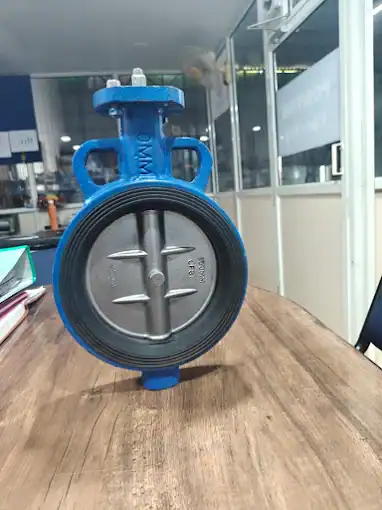
To understand how a butterfly valve works, imagine a circular metal disc placed inside a pipeline.
This disc is connected to a shaft called the stem. The stem is attached to an operating mechanism such as a manual lever, gearbox, pneumatic actuator, or electric actuator.
Whenever the handle is rotated or an actuator receives a control signal, the stem rotates the disc.
The movement of the disc controls the flow inside the pipeline.
Fully Open Position
When the disc rotates parallel to the direction of the fluid, the valve allows almost unrestricted flow.
In this position, pressure loss is minimal, making butterfly valves suitable for high-flow industrial systems.
Partially Open Position
The disc can stop at different angles between fully open and fully closed.
This position allows operators to regulate flow instead of completely stopping it.
The ability to throttle flow makes butterfly valves useful for many industrial processes.
Fully Closed Position
When the disc rotates by 90 degrees and becomes perpendicular to the flow, it completely blocks the passage.
This creates a reliable shut-off and helps prevent unwanted flow through the pipeline.
Modern butterfly valves manufactured by a trusted Butterfly Valve Manufacturer in Indore are designed to provide smooth operation even after thousands of opening and closing cycles.
Industries looking for reliable flow control often choose products supplied by the best valve manufacturers in Indore because they deliver consistent quality, accurate machining, and dependable long-term performance.
Main Components of a Butterfly Valve
Every butterfly valve consists of several important components. Each part performs a specific function that contributes to smooth operation and long service life.
Valve Body
The valve body is the outer shell of the butterfly valve.
It supports all internal components and connects the valve to the pipeline.
Common body materials include:
- Cast Iron
- Ductile Iron
- Carbon Steel
- Stainless Steel
- Duplex Stainless Steel
- Special Alloy Materials
The body material is selected according to pressure, temperature, and media compatibility.
A reliable Butterfly Valve Manufacturer in India always recommends the correct body material based on the application.
Valve Disc
The disc is the primary flow control component inside the butterfly valve.
It rotates during operation and controls the movement of the fluid.
Common disc materials include:
- Stainless Steel
- Carbon Steel
- Aluminium Bronze
- Ductile Iron
- Duplex Stainless Steel
The disc design directly affects valve efficiency, sealing performance, and pressure loss.
High-quality Industrial Butterfly Valve manufacturers use precision-machined discs to improve flow performance and reduce wear.
Stem
The stem transfers movement from the operating mechanism to the valve disc.
It is manufactured using high-strength materials to withstand continuous operation.
A precision-machined stem ensures smooth rotation and long-term reliability.
Valve Seat
The valve seat creates a leak-tight seal between the disc and the valve body.
Popular seat materials include:
- EPDM
- PTFE
- NBR
- Metal Seat
Selecting the right seat material is important because it affects sealing performance, chemical resistance, and service life.
Many of the best valve manufacturers in Indore provide different seat options based on industrial operating conditions.
Actuator
The actuator operates the butterfly valve.
Common operating methods include:
- Manual Lever
- Gear Operator
- Pneumatic Actuator
- Electric Actuator
The actuator type depends on valve size, operating conditions, and automation requirements.
Leading companies recognized as the best valve manufacturers in Indore also offer customized actuator solutions for automated industrial systems.
Why Is the Butterfly Valve Working Principle So Popular?
The Butterfly Valve Working Principle has become popular because it combines simple engineering with reliable industrial performance.
Some major benefits include:
- Quick quarter-turn operation
- Compact and lightweight construction
- Lower operating torque
- Easy installation
- Low maintenance requirements
- Suitable for automation
- Long service life
- Reliable sealing performance
- Cost-effective solution for industrial pipelines
These advantages have made butterfly valves one of the most widely used flow control devices across industries.
Whether you are selecting valves for a new project or upgrading an existing system, working with a trusted Butterfly Valve Manufacturer in Indore, a reputed Butterfly Valve Manufacturer in India, or one of the best valve manufacturers in Indore helps ensure product quality, engineering support, and long-term operational reliability.
Manual Butterfly Valve Working
A manual butterfly valve is the simplest type of butterfly valve used in industrial piping systems. It is operated by a hand lever or handwheel without the need for electricity or compressed air.
When the operator turns the handle by 90 degrees, the stem rotates the disc inside the valve body. If the disc is parallel to the pipeline, the valve is fully open. If the disc is perpendicular to the pipeline, the valve is fully closed.
Manual butterfly valves are commonly used in water treatment plants, HVAC systems, irrigation networks, and general industrial pipelines where frequent automation is not required.
A trusted Butterfly Valve Manufacturer in Indore designs manual butterfly valves with strong bodies, durable seats, and precision-machined discs to ensure smooth operation and a long service life.
Gear Operated Butterfly Valve Working
Large butterfly valves require more operating torque. In these applications, a gear-operated mechanism is used.
The gearbox reduces the effort required to rotate the disc while providing better control during opening and closing.
Gear-operated butterfly valves are suitable for:
- Large diameter pipelines
- High-pressure systems
- Water treatment plants
- Power plants
- Cement industries
- Steel manufacturing units
Many industrial buyers choose products from the best valve manufacturers in Indore because these manufacturers provide robust gear-operated butterfly valves designed for heavy-duty applications.
Pneumatic Butterfly Valve Working
A pneumatic butterfly valve uses compressed air to operate the valve automatically.
When compressed air enters the actuator, it rotates the stem, which turns the disc inside the valve body.
Pneumatic butterfly valves are preferred where fast operation and automatic control are essential.
Common Applications
- Chemical plants
- Food processing
- Pharmaceutical industries
- Water treatment plants
- Oil & gas facilities
A high-quality Industrial Butterfly Valve with a pneumatic actuator helps improve process efficiency while reducing manual intervention.
Electric Butterfly Valve Working
Electric butterfly valves use an electric actuator instead of manual force or compressed air.
The actuator receives an electrical signal from the control system and rotates the stem to open or close the valve.
Electric butterfly valves are widely used in automated industrial plants where accurate flow control is required.
Advantages
- Remote operation
- Precise positioning
- Easy integration with automation systems
- Reduced labour requirements
- Reliable performance
Leading companies working as a Butterfly Valve Manufacturer in India manufacture electric butterfly valves for industries requiring advanced automation and process control.
Factors That Affect Butterfly Valve Performance
The performance of a butterfly valve depends on several important factors.
Valve Material
Choosing the correct body and disc material ensures better strength, corrosion resistance, and durability.
Common materials include:
- Carbon Steel
- Stainless Steel
- Ductile Iron
- Duplex Stainless Steel
- Special Alloys
Seat Material
The seat plays a major role in sealing performance.
Popular seat materials include:
- EPDM
- PTFE
- NBR
- Metal Seat
The correct seat material should always be selected according to the process media and operating temperature.
Pressure Rating
The valve pressure rating must match the system pressure to ensure safe operation.
Selecting the wrong pressure class may reduce valve life and affect sealing performance.
Temperature
Every butterfly valve is designed for a specific operating temperature range.
Extreme temperatures require special body materials and seat designs.
Installation Quality
Proper installation ensures smooth operation and prevents leakage.
Incorrect alignment or improper tightening of flange bolts may affect valve performance.
This is why industries often prefer products supplied by the best valve manufacturers in Indore, who also provide technical guidance for installation and maintenance.
Common Butterfly Valve Problems
Like any industrial equipment, butterfly valves may develop issues if they are not selected or maintained correctly.
Leakage
Leakage usually occurs due to worn seats, damaged discs, or improper installation.
Regular inspection helps prevent this problem.
High Operating Torque
If excessive force is required to operate the valve, possible reasons include:
- Seat wear
- Dirt accumulation
- Lack of lubrication
- Incorrect installation
Disc Damage
A damaged disc can reduce flow efficiency and affect sealing performance.
Proper material selection helps increase disc life.
Corrosion
Using unsuitable body materials in corrosive environments may reduce valve life.
Selecting the correct material is essential for long-term performance.
Butterfly Valve Maintenance Tips
Proper maintenance improves reliability and extends the service life of butterfly valves.
Follow these best practices:
- Inspect the valve regularly.
- Check for seat wear.
- Clean the disc and body.
- Lubricate moving parts where required.
- Operate the valve periodically.
- Replace damaged seals immediately.
- Follow the manufacturer’s maintenance guidelines.
Regular maintenance reduces downtime and improves plant efficiency.
Advantages of the Butterfly Valve Working Principle
The Butterfly Valve Working Principle offers several important advantages.
Fast Operation
The valve opens and closes with only a quarter-turn rotation.
Compact Design
Butterfly valves require less installation space compared to many other valve types.
Lightweight Construction
Their lightweight design reduces transportation and installation costs.
Low Maintenance
Simple construction means fewer moving parts and lower maintenance requirements.
Easy Automation
Butterfly valves can be easily connected to pneumatic or electric actuators for automatic operation.
Cost-Effective Solution
Butterfly valves provide excellent value for money while maintaining reliable industrial performance.
These advantages make butterfly valves one of the most preferred products manufactured by a trusted Butterfly Valve Manufacturer in Indore and supplied by a leading Butterfly Valve Manufacturer in India.
Conclusion
Understanding the Butterfly Valve Working Principle helps engineers, plant operators, and industrial buyers select the right valve for their applications. Butterfly valves are known for their simple construction, reliable sealing, compact design, and efficient quarter-turn operation.
Whether you choose a manual, gear-operated, pneumatic, or electric butterfly valve, selecting the correct design and materials is essential for achieving long-term performance and low maintenance.
Industries across water treatment, power generation, cement, steel, chemical processing, food production, and oil & gas continue to rely on high-quality Industrial Butterfly Valve solutions for efficient flow control.
When sourcing butterfly valves, working with an experienced Butterfly Valve Manufacturer in Indore, a trusted Butterfly Valve Manufacturer in India, or one of the best valve manufacturers in Indore ensures you receive products built to high-quality standards with dependable technical support.
Frequently Asked Questions (FAQs)
What is the butterfly valve working principle?
The butterfly valve working principle is based on rotating a circular disc by 90 degrees to control, regulate, or stop the flow of liquids or gases inside a pipeline.
Why is a butterfly valve called a quarter-turn valve?
A butterfly valve is called a quarter-turn valve because it opens or closes completely with a 90-degree rotation of the disc.
Can a butterfly valve be used for flow control?
Yes. Butterfly valves can be used for both isolation and throttling applications, depending on the system requirements.
Which industries use butterfly valves?
Butterfly valves are widely used in water treatment, wastewater, chemical processing, cement, power generation, steel plants, food processing, pharmaceuticals, HVAC, and oil & gas industries.
What are the main components of a butterfly valve?
The main components include the valve body, disc, stem, seat, and actuator.
What is the difference between manual and pneumatic butterfly valves?
A manual butterfly valve is operated by hand using a lever or gear, while a pneumatic butterfly valve uses compressed air for automatic operation.
Which seat material is best for butterfly valves?
The best seat material depends on the application. EPDM is commonly used for water, PTFE is suitable for chemicals, NBR works well with oils, and metal seats are preferred for high-temperature services.
How can I increase the service life of a butterfly valve?
Regular inspection, proper installation, correct material selection, routine cleaning, and timely replacement of worn seals help increase the service life of a butterfly valve.