Butterfly valves play an important role in modern industrial piping systems. They are used to control, regulate, or stop the flow of liquids, gases, and other process media. Because of their compact design, quick operation, and reliable performance, butterfly valves have become one of the most popular flow control valves across different industries.
Whether it is a water treatment plant, cement factory, chemical processing unit, power plant, steel manufacturing facility, or food processing industry, butterfly valves help maintain smooth and efficient operations. Their lightweight construction and quarter-turn operation make them easy to install, operate, and maintain.
If you are searching for a trusted Butterfly Valve Manufacturer in Indore, it is also important to understand how butterfly valves work, the different types available, their applications, advantages, and how to choose the right valve for your industrial process. A better understanding helps engineers, buyers, EPC contractors, and plant operators select the right solution for long-term performance.
India has become a leading manufacturing hub for industrial valves. Today, every reliable Butterfly Valve Manufacturer in India focuses on delivering high-quality products that meet national and international industrial standards. These valves are designed to provide efficient flow control while reducing maintenance costs and improving operational safety.
This complete guide explains everything you need to know about industrial butterfly valves in simple language. Whether you are a beginner, engineering student, maintenance engineer, procurement manager, or industrial buyer, this article will help you understand butterfly valves from basic concepts to industrial applications.
What Is a Butterfly Valve?
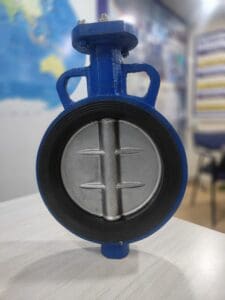
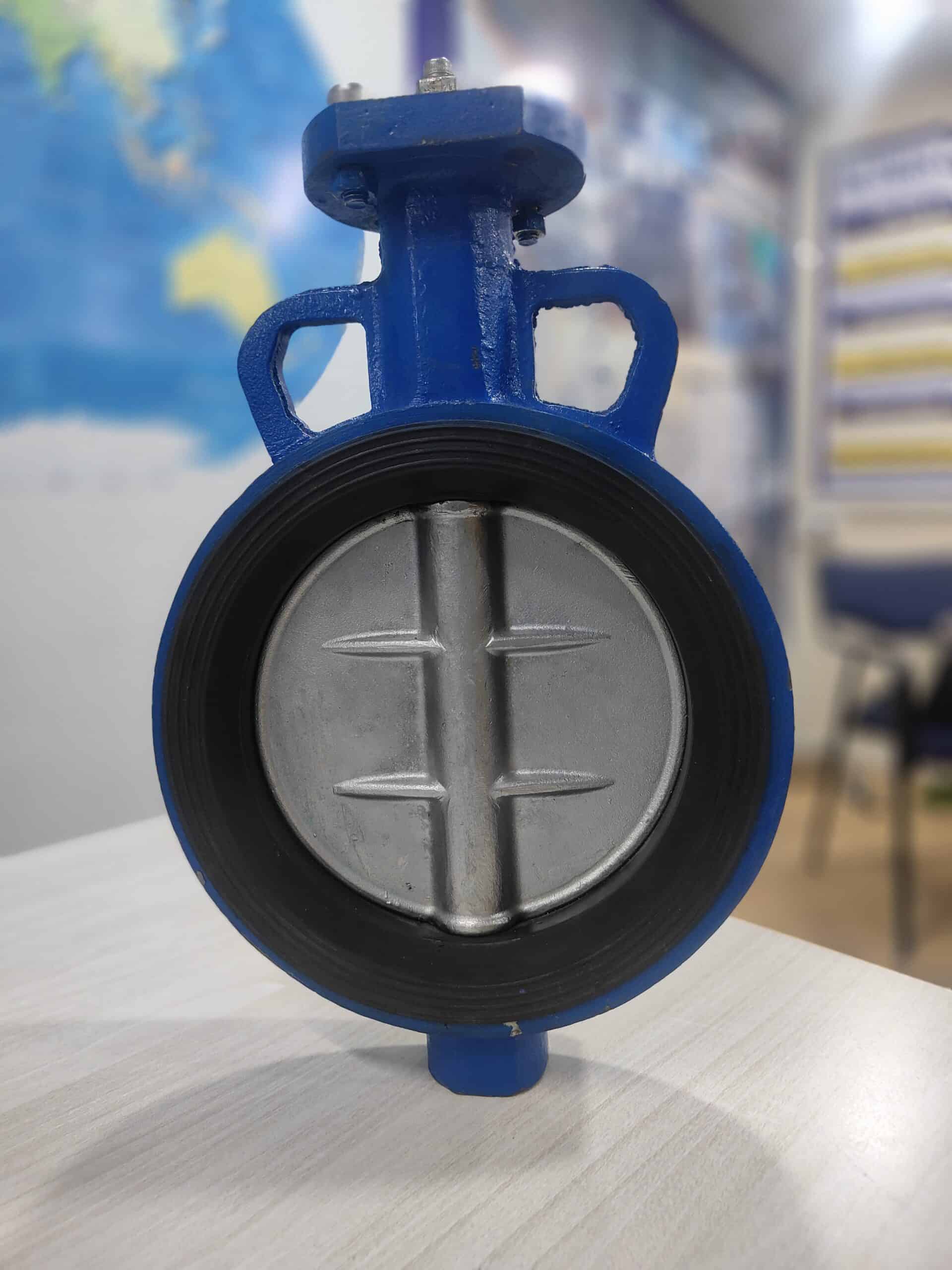
A butterfly valve is a quarter-turn rotary valve used to start, stop, or regulate the flow of fluids inside a pipeline. The valve contains a circular disc mounted on a shaft. When the handle or actuator rotates the shaft by 90 degrees, the disc also rotates.
When the disc is parallel to the direction of flow, the valve remains fully open and allows fluid to pass through the pipeline. When the disc rotates perpendicular to the flow, it blocks the passage and stops the movement of fluid.
Because the valve requires only a quarter turn to open or close, it operates much faster than many traditional valve designs.
A high-quality Industrial Butterfly Valve is widely preferred because it combines excellent performance with a compact and lightweight design. Compared to many other valve types, butterfly valves occupy less installation space and require fewer components, making them easier to maintain throughout their service life.
Today, a professional Butterfly Valve Manufacturer in Indore produces butterfly valves in different materials, pressure ratings, and configurations to meet the needs of multiple industries.
How Does a Butterfly Valve Work?
The working principle of a butterfly valve is simple and highly efficient.
Inside the valve body, a circular disc is connected to a central shaft called the stem. The stem is connected to a manual lever, gearbox, pneumatic actuator, or electric actuator.
When the operator rotates the handle or when an actuator receives a control signal, the stem rotates. This movement turns the disc by 90 degrees.
The valve operates in three different positions.
Fully Open Position
In the open position, the disc becomes parallel to the direction of flow. This allows liquid, gas, or slurry to move freely with very little resistance.
Partially Open Position
The disc can also remain partially open. In this position, the valve controls the flow rate rather than completely stopping it. This process is known as throttling.
Fully Closed Position
When the disc rotates perpendicular to the pipeline, it completely blocks the flow path. This creates a reliable shut-off for the system.
The simple working mechanism is one of the biggest reasons why industries prefer butterfly valves over heavier valve designs in many applications.
Leading companies working as a Butterfly Valve Manufacturer in India continuously improve valve design to provide smoother operation, lower torque, and longer service life.
Main Components of a Butterfly Valve
Every butterfly valve consists of several important components. Each part performs a specific function to ensure smooth and reliable operation.
Valve Body
The valve body forms the outer structure of the butterfly valve. It holds all internal components together and connects the valve to the pipeline.
Depending on the application, the body can be manufactured using:
- Cast Iron
- Ductile Iron
- Carbon Steel
- Stainless Steel
- Special Alloys
The body material should always be selected according to pressure, temperature, and media compatibility.
Valve Disc
The disc is the primary flow control component.
It rotates inside the valve body to regulate fluid movement. Different disc materials are selected depending on the application.
Common disc materials include:
- Stainless Steel
- Ductile Iron
- Carbon Steel
- Aluminium Bronze
- Duplex Stainless Steel
A well-designed disc helps reduce pressure loss while improving sealing performance.
Stem
The stem connects the operating mechanism to the disc.
It transfers rotational movement from the actuator or handle directly to the disc.
High-strength stainless steel stems are commonly used because they provide excellent corrosion resistance and long service life.
Seat
The seat creates a tight seal between the disc and the valve body.
A properly selected seat prevents leakage and improves valve efficiency.
Different seat materials are available for different industrial applications, including:
- EPDM
- PTFE
- NBR
- Metal Seats
The correct seat material depends on the process media, operating temperature, and pressure conditions.
Actuator
The actuator operates the butterfly valve.
Different actuator options include:
- Manual Lever
- Gear Operated
- Pneumatic Actuator
- Electric Actuator
Modern industrial automation systems often use pneumatic or electric actuators for remote operation.
Why Are Butterfly Valves So Popular?
Butterfly valves have become one of the most widely used industrial valves because they offer an excellent balance between performance, cost, and ease of operation.
Some of the main reasons for their popularity include:
- Compact and lightweight design
- Quick quarter-turn operation
- Low installation cost
- Easy maintenance
- Reliable shut-off performance
- Suitable for manual and automated systems
- Available in a wide range of sizes and materials
- Excellent choice for water, chemicals, slurry, air, steam, and industrial fluids
These advantages have made butterfly valves the preferred solution for thousands of industrial applications worldwide.
As a result, every experienced Butterfly Valve Manufacturer in Indore and Butterfly Valve Manufacturer in India continues to invest in improved manufacturing processes, advanced materials, and precision engineering to meet the growing demand for high-performance industrial valves.
Butterfly Valve Types
Selecting the right butterfly valve is important for achieving reliable performance and long service life. Different industries require different valve designs depending on pressure, temperature, installation space, and process media. A trusted Butterfly Valve Manufacturer in Indore offers several butterfly valve designs to meet these industrial requirements.
Below are the most commonly used butterfly valve types.
1. Wafer Type Butterfly Valve
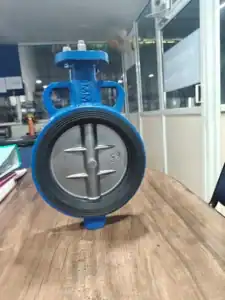
The wafer type butterfly valve is one of the most popular butterfly valve designs used in industrial piping systems. It is installed between two pipe flanges and held in place by flange bolts.
This valve is lightweight, compact, and economical, making it a preferred choice for many industrial applications.
Key Features
- Compact design
- Lightweight construction
- Easy installation
- Cost-effective solution
- Suitable for limited installation space
Common Applications
- Water treatment plants
- HVAC systems
- Food processing plants
- Chemical industries
- General industrial pipelines
Many industries choose this Industrial Butterfly Valve because it provides reliable flow control with minimal maintenance.
2. Lug Type Butterfly Valve
A lug type butterfly valve has threaded inserts called lugs around the valve body. These threaded holes allow the valve to be bolted directly to the pipeline.
This design makes maintenance much easier because one side of the pipeline can be disconnected without disturbing the other side.
Advantages
- Easy pipeline maintenance
- Strong and secure installation
- Better support for larger systems
- Suitable for isolation service
3. Double Flanged Butterfly Valve
A double flanged butterfly valve has flanges on both ends of the valve body. It is mainly used in larger pipelines where extra strength and stability are required.
Benefits
- Strong mechanical support
- Excellent alignment
- Suitable for heavy-duty industrial applications
- Long service life
4. Concentric Butterfly Valve
The concentric butterfly valve is the most common butterfly valve used for low and medium-pressure applications.
In this design, the disc and shaft are positioned in the center of the valve body.
Best Suitable For
- Water supply systems
- Fire protection systems
- HVAC plants
- General industrial applications
5. Double Offset Butterfly Valve
Double offset butterfly valves are specially designed to reduce friction between the disc and the seat during operation.
This reduces wear and extends the valve’s service life.
Benefits
- Lower operating torque
- Reduced seat wear
- Improved sealing
- Longer maintenance intervals
6. Triple Offset Butterfly Valve
Triple offset butterfly valves are designed for demanding industrial applications involving high pressure and high temperature.
These valves use a metal-to-metal sealing arrangement that provides excellent leak-tight performance.
Typical Applications
- Power plants
- Oil & gas industry
- Steam pipelines
- Petrochemical plants
- Refinery projects
Leading companies working as a Butterfly Valve Manufacturer in India often manufacture triple offset butterfly valves for critical industrial services.
Butterfly Valve Applications
Butterfly valves are used in almost every major industry because they provide reliable flow control and quick operation.
Water & Wastewater Treatment
Butterfly valves regulate water flow in treatment plants, pumping stations, and distribution systems.
Chemical Industry
Chemical processing requires valves that can safely handle corrosive liquids and aggressive chemicals. Proper seat and body material selection ensures reliable performance.
Power Plants
Power stations use butterfly valves in cooling water systems, condensate lines, and auxiliary pipelines.
Cement Industry
Butterfly valves help control the movement of air, water, and process media in cement manufacturing plants.
Steel Industry
Steel plants require robust butterfly valves for cooling systems, utility pipelines, and industrial process control.
Food & Beverage Industry
Special hygienic butterfly valves are used where cleanliness and contamination-free operation are essential.
Oil & Gas Industry
Butterfly valves are widely used for fluid isolation, pipeline control, and automated process systems.
Advantages of Butterfly Valves
Butterfly valves offer many advantages compared to other industrial valves.
Compact Design
Butterfly valves occupy less installation space, making them ideal for compact piping systems.
Lightweight Construction
Their lightweight design makes transportation, handling, and installation easier.
Quick Operation
Only a 90-degree rotation is required to open or close the valve completely.
Cost-Effective Solution
Butterfly valves are generally more affordable than many other industrial valves, especially for larger pipe sizes.
Low Maintenance
Their simple internal design reduces maintenance requirements and minimizes downtime.
Easy Automation
Butterfly valves can be easily operated using pneumatic, electric, or hydraulic actuators.
These benefits make them one of the most preferred products offered by every reliable Butterfly Valve Manufacturer in Indore.
Limitations of Butterfly Valves
Although butterfly valves provide many benefits, they also have some limitations.
- The disc remains inside the flow path.
- Pressure drop may be slightly higher than full-port valves.
- Wrong seat selection may reduce sealing efficiency.
- Extremely high-pressure applications may require specialized valve designs.
Selecting the right valve according to operating conditions helps overcome these limitations.
How to Choose the Right Butterfly Valve
Choosing the correct butterfly valve improves system performance and reduces maintenance costs.
Before selecting a valve, consider:
- Type of fluid
- Operating pressure
- Working temperature
- Valve size
- Body material
- Disc material
- Seat material
- Manual or automatic operation
- Installation location
- Industry requirements
A professional Butterfly Valve Manufacturer in India can help recommend the most suitable valve configuration based on your application.
Why Butterfly Valves Are Preferred in Industrial Applications
Industries around the world choose butterfly valves because they combine efficiency, durability, and affordability.
Their ability to provide quick shut-off, smooth flow regulation, and easy automation makes them suitable for modern industrial systems.
Whether installed in water treatment facilities, chemical plants, power stations, cement factories, or steel plants, butterfly valves continue to deliver dependable performance with minimal maintenance.
Conclusion
Butterfly valves have become one of the most trusted flow control solutions across industrial sectors. Their compact design, quarter-turn operation, easy installation, and long service life make them suitable for a wide range of applications.
Understanding different butterfly valve types, working principles, applications, materials, and selection factors helps engineers and buyers choose the right valve for every project.
As industrial processes continue to evolve, high-quality Industrial Butterfly Valve solutions remain essential for achieving safe, efficient, and reliable operations. Partnering with an experienced Butterfly Valve Manufacturer in Indore or a trusted Butterfly Valve Manufacturer in India ensures access to durable products that meet modern industrial standards and long-term performance requirements.
Frequently Asked Questions (FAQs)
What is a butterfly valve used for?
A butterfly valve is used to control, regulate, or stop the flow of liquids, gases, and other media in industrial pipelines.
How does a butterfly valve work?
A butterfly valve works by rotating a circular disc through 90 degrees to either allow or block fluid flow.
What are the main types of butterfly valves?
The most common types are wafer type, lug type, double flanged, concentric, double offset, and triple offset butterfly valves.
Which industries use butterfly valves?
Butterfly valves are widely used in water treatment, chemical processing, cement, steel, power generation, food processing, HVAC, and oil & gas industries.
What are the advantages of butterfly valves?
They are lightweight, compact, cost-effective, easy to install, require low maintenance, and support quick quarter-turn operation.
Which butterfly valve is best for high-temperature applications?
Triple offset butterfly valves are generally preferred for high-temperature and high-pressure industrial applications.
Can butterfly valves be automated?
Yes. Butterfly valves can be operated using manual levers, gear operators, pneumatic actuators, or electric actuators depending on the application.
How do I choose the right butterfly valve?
Consider factors such as fluid type, pressure, temperature, valve size, body material, seat material, and operating method before selecting a butterfly valve.